
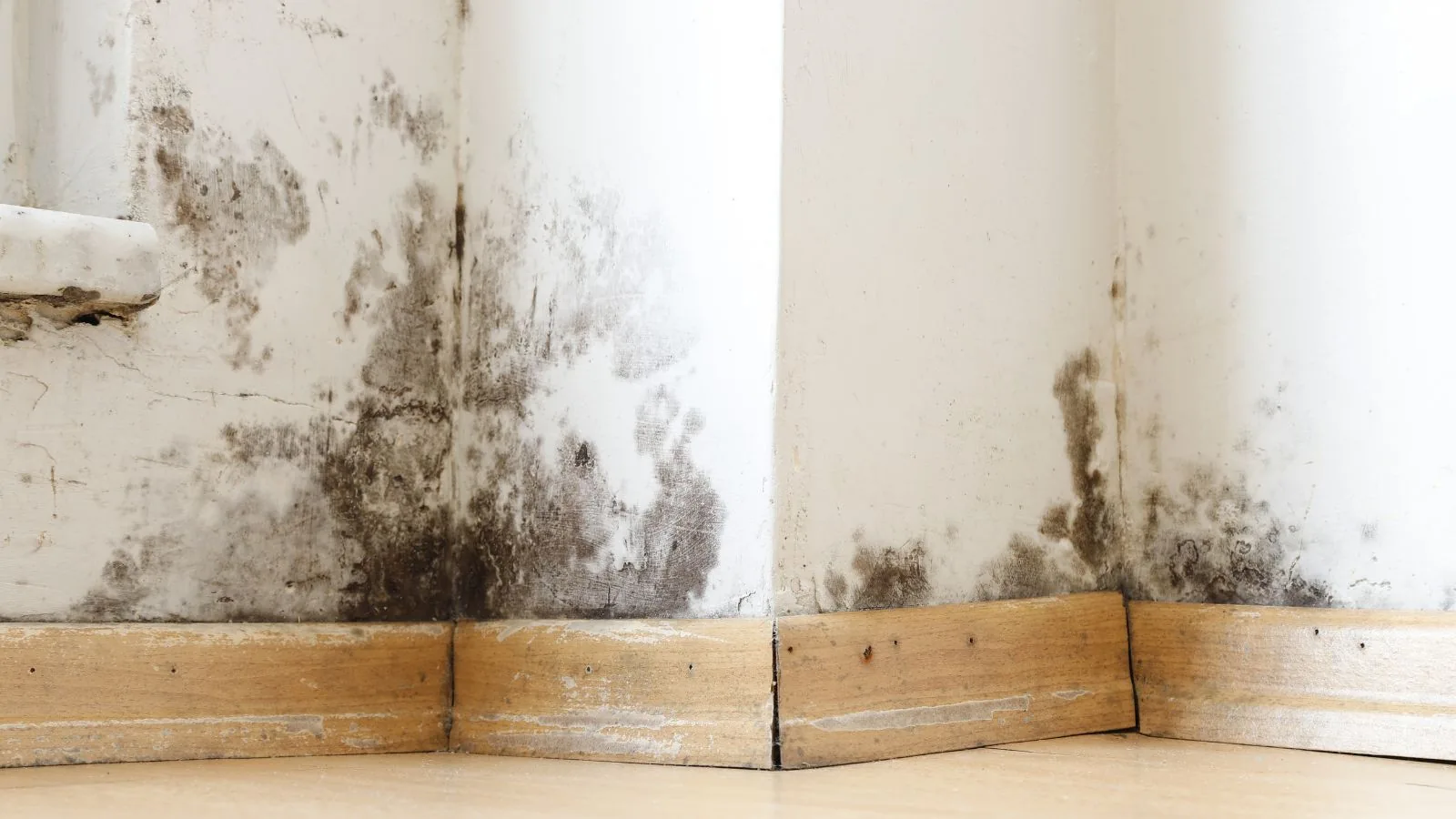
Black spots on a basement wall, ceiling or box spring bring up a lot of worry. Many molds look dark, and color alone does not tell you the type. A lab test or an assessor is needed for that. What you can decide today is what to do with the moisture and how to avoid making things worse.
Why color does not identify the mold
Mold comes in many colors, and the same species can look different depending on the material and the moisture. People often use the term black mold for any dark growth. Without testing, treat it as mold that needs the same careful handling.
We do not make health claims about mold on this site. If you or someone in your home has health concerns, talk to a doctor.
First, find the water
Mold needs moisture, so the useful question is where the water comes from. Common basement sources include a seeping wall or floor crack, a leaking pipe or water heater, a dryer vent that exhausts indoors, a window well that fills with rain and humid air with no dehumidification.
- Look for dripping or damp spots on pipes and fittings.
- Check the base of walls for staining or a line where water rose.
- Run your hand along the bottom of drywall. Soft or cold material means moisture.
- Look at the water heater and washing machine hoses.
- Check gutters and downspouts outside, since runoff can enter through the foundation.
What to avoid
- Do not scrub dry growth hard, because that can release spores into the air.
- Do not paint over it. Paint does not stop moisture or kill growth.
- Do not mix bleach with other cleaners.
- Do not run a fan across the growth, which moves spores through the house.
- Do not ignore it for weeks while you wait to see if it dries.
Keeping the basement from growing mold again
After the cleanup, prevention is mostly about moisture control. A dehumidifier set to keep the air comfortably dry, a clear path for downspouts away from the foundation and a quick response to any leak do more than any treatment. Check the basement after heavy rain and after long spells of damp weather.
Store belongings in plastic bins off the floor instead of cardboard. Keep a few inches between boxes and walls so air can move. If the basement has a sump pump, test it a couple of times a year by pouring water into the pit and confirming it runs and discharges.
These steps lower the odds, but they cannot promise that growth will never return.
Need a clear plan for dark growth in the basement? Call and describe what you see.
Call (516) 845-9582How big is it? The ten square foot line
The EPA says that areas of mold smaller than about ten square feet, roughly a three-foot by three-foot patch, can usually be handled by the homeowner. Larger areas call for more careful handling. New York's Department of Labor uses the same ten square foot threshold in its mold program, and it says licenses are required for assessors and remediators on larger projects.
The state also says no licensee may do both assessment and remediation on the same project. That means a large job often has an assessor who writes the plan and checks the result, and a remediator who does the work.
What professional remediation involves
Professional work follows the IICRC S520 standard for mold remediation. The crew contains the area, removes affected porous materials, cleans surfaces and dries the space. Air filtration helps keep spores out of the rest of the house. The mold remediation page lays out the steps.
No company can promise that mold will never return. If moisture comes back, mold can too. A good plan therefore includes the moisture fix and a way to keep humidity down.
If the mold followed a flood or leak
When mold shows up after water damage, drying was probably incomplete. See basement water damage cleanup and structural drying for what a measured dry-out involves.
Homeowners in New Hyde Park and Carle Place with finished basements call us about this often, and the first question is always the same. Where is the water coming from?
A local note on mold rules
Mineola is in New York State, where Labor Law Article 32 sets the mold licensing rules. The Department of Labor notes that a residential owner who works on their own property is exempt from licensing, and that owners of buildings with four or fewer dwelling units have an exemption as well.
Local repairs after remediation, such as new drywall with electrical work, may need a permit. The Village of Mineola Building Department handles permits for plumbing, electrical and construction work.
Questions about this topic in Mineola
Is black mold more dangerous than other mold?
We make no health claims. Color does not identify the type, so treat any large growth carefully and talk to a doctor about health concerns.
Can I clean a small patch myself?
The EPA says areas under about ten square feet can usually be handled by the homeowner. Fix the moisture first.
Do I need a test?
A test or assessment can help on larger projects. In New York, assessment must be done by a licensed assessor and not the company that removes the mold.
Will a dehumidifier solve it?
It helps control humidity, but it does not remove existing growth or fix a leak.
Who do I call in Mineola about a basement permit after remediation?
The Village of Mineola Building Department, which requires permits for plumbing, electrical and construction work.