
Walls still damp or smell musty after the water is gone?
Even when the floor looks dry, framing, subfloor and drywall can hold water for days. That hidden moisture is what causes warping, musty smells and mold. The trade solution is structural drying and dehumidification, often called water mitigation.
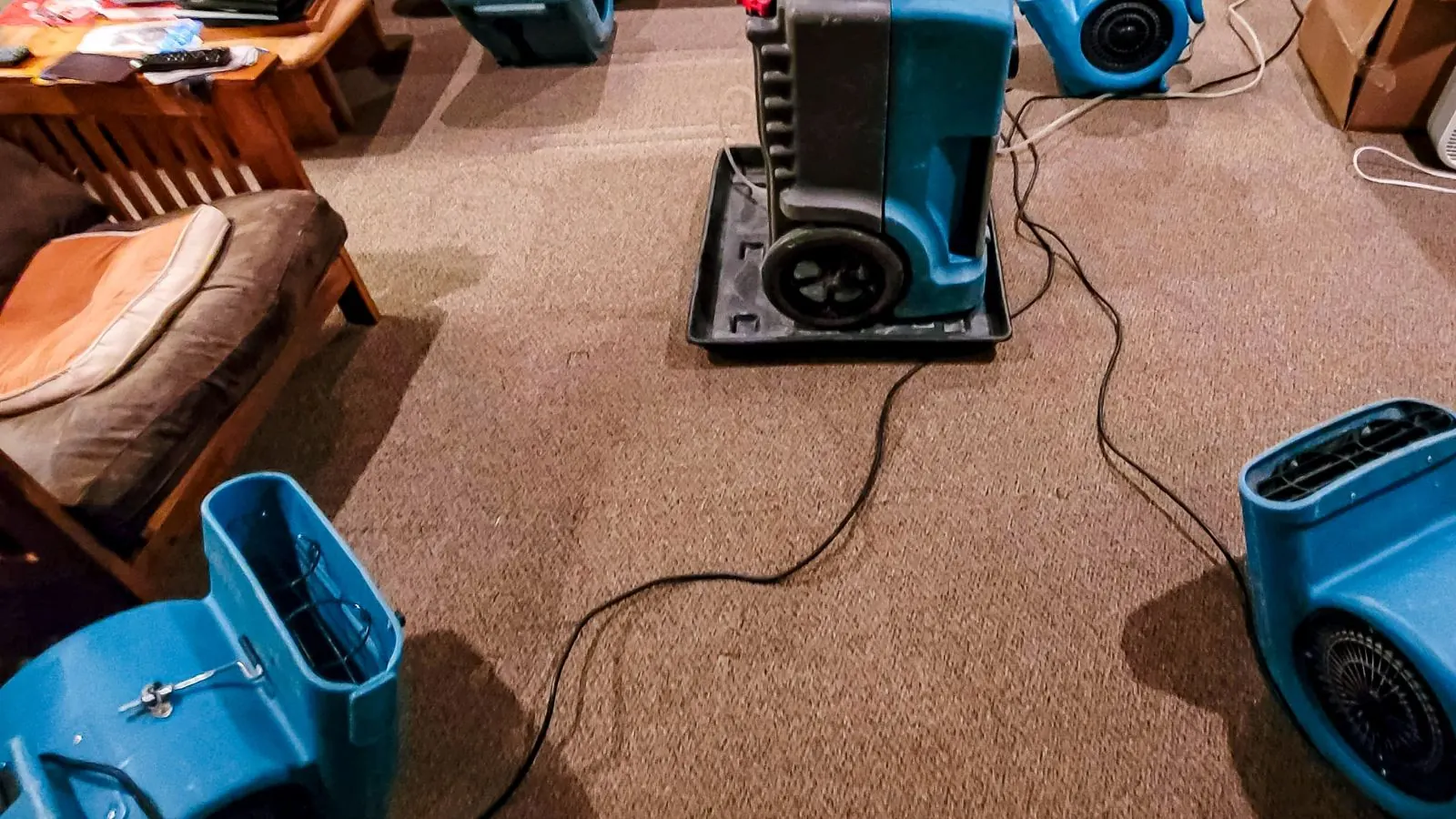
Structural drying and dehumidification in Mineola, NY is the use of air movers, low-grain refrigerant dehumidifiers and moisture meters to bring a building back to its normal moisture level after a water loss. It is time-sensitive, because materials start to degrade and mold risk rises as wet days pile up.
How moisture mapping works
Before equipment goes in, the crew maps moisture. A pin or pinless meter reads the water content of drywall, wood and subfloor. A thermal imaging camera shows cool, wet areas. Readings are recorded on day one and again on each visit, so there is a clear record of the drying curve.
| Equipment. | Job. | Notes. |
|---|---|---|
| Air mover. | Moves air across wet surfaces. | Placed along walls and across floors. |
| LGR dehumidifier. | Pulls moisture out of the air. | Lowers humidity so materials release water. |
| Moisture meter. | Reads moisture in building materials. | Used daily to track progress. |
| Thermal imaging camera. | Shows wet areas behind finishes. | Used for mapping, not as a final reading. |
What water mitigation means
Water mitigation is the work of limiting a loss. It starts with stopping the source, then removing standing water and wet materials and drying the rest. It does not include rebuilding. A closed-up building with running equipment may be loud and warm, but that is how the water leaves.
Map.
Readings and thermal images show where water is.
Set equipment.
Air movers and dehumidifiers are placed to match the wet area.
Monitor.
The crew returns, rereads and adjusts equipment.
Confirm dry.
Equipment is removed when readings match dry standards.
What you can do to help drying
- Keep doors and windows closed while dehumidifiers run, so the machines are not drying the outdoors.
- Do not unplug or move equipment, because placement was chosen from the readings.
- Move furniture off wet floors and keep belongings away from wet walls.
- Report any new stains, smells or changes between visits.
Running the home's air conditioning during drying can help in warm weather, but ask the crew first. The crew may want a particular temperature.
Drying and mold risk
Mold needs moisture, so drying quickly and to the right readings reduces the risk. It does not eliminate it, and nobody can promise that mold will never appear. If you see mold during drying, tell the crew. New York requires licensed contractors for mold projects over ten square feet, as explained on the mold remediation page.
Structural drying is defined in the IICRC S500 standard, which sets the idea of drying to a documented dry standard rather than to a set number of days.
What to do while equipment runs: keep doors to the drying area closed, leave equipment plugged in and do not move air movers.
Floors or walls still damp? Call the 24/7 line and ask how drying would work in your home.
Call (516) 845-9582How long drying takes
Most structures need several days. Thick materials like hardwood and subfloor take longer than carpet. Humid weather and a building that holds heat can change the timeline. In Mineola, summer humidity slows drying, so dehumidifiers do more of the work than open windows.
Equipment rentals are not offered through this site. Drying is done by professionals who place and monitor the equipment, because misplaced equipment can leave pockets of moisture.
What shapes drying costs
Drying is priced by equipment and time.
- The number of air movers and dehumidifiers needed.
- How many days it takes to reach dry readings.
- The materials involved.
- Whether demolition opened walls first.
- Monitoring visits.
Insurers usually look at documented readings. Ask your insurer what applies. Want your real number? Call (516) 845-9582 and a dispatcher will explain the scope and the price before work starts.
Wet carpet is discussed on the carpet water damage restoration page, and drywall is on the wall and drywall water damage repair page. The Albertson page covers service in that hamlet.
Questions about structural drying in Mineola
How do I know if my home is truly dry?
Moisture meter readings compared with dry reference readings tell you. A floor that feels dry on top can still be wet below.
Is the equipment noisy?
Yes, air movers and dehumidifiers run continuously. That is normal.
Can I use my own fans and dehumidifier?
They help with small spills. A larger loss needs equipment sized and placed for the wet area.
Why is the house warm during drying?
Dehumidifiers give off heat. Warmth also helps materials release moisture.
Do you rent air movers and dehumidifiers?
Not through this site. Drying is done by crews that monitor the equipment.