
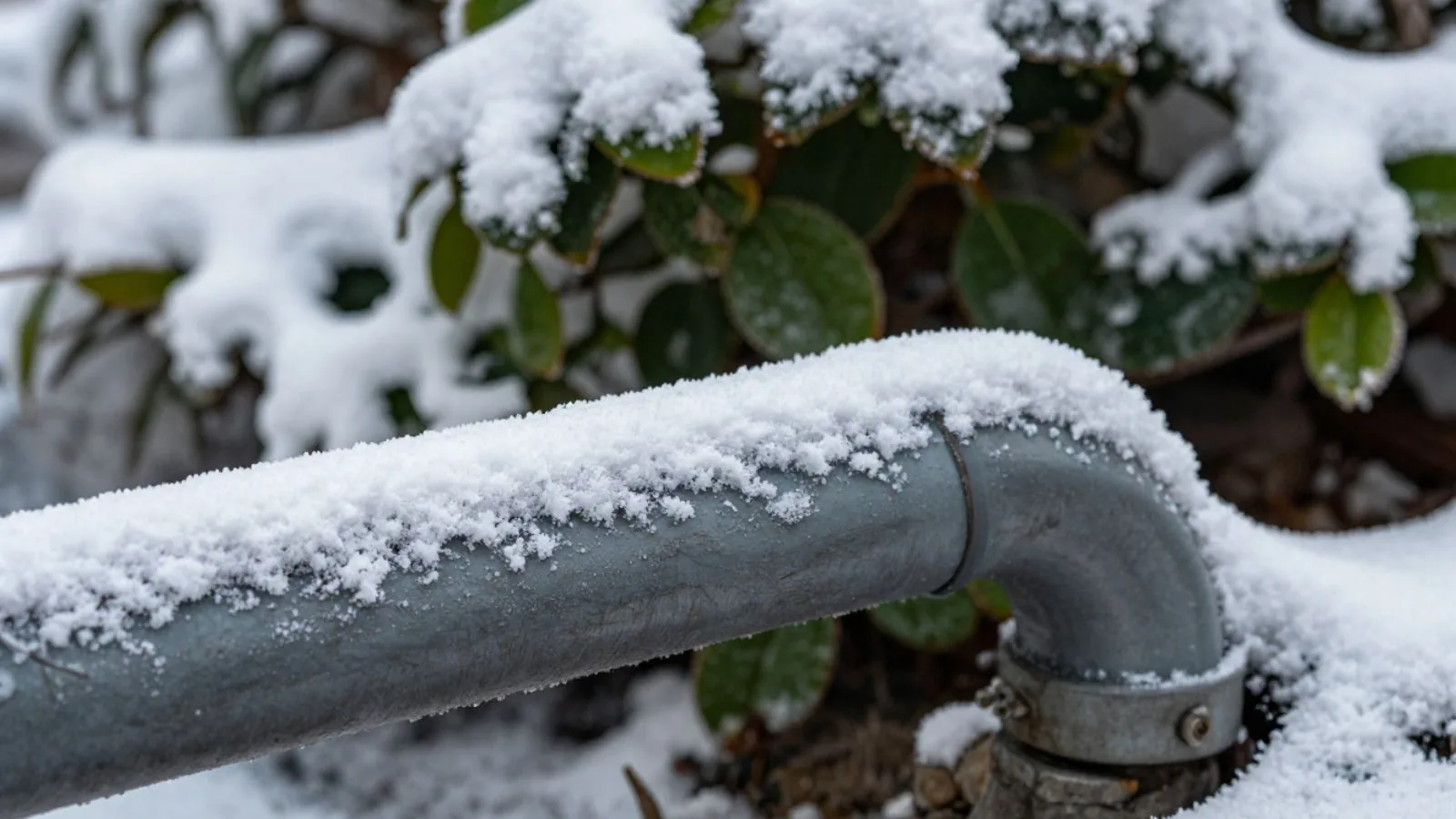
Frozen pipe water damage in Mineola, NY happens when water inside a pipe freezes, expands and splits the pipe, then floods the space as it thaws. The leak often starts hours after the temperature rises, when you are away or asleep. If a pipe has split or you see water, call the 24/7 line and shut off the main valve now.
Ice acts like a plug. Pressure builds behind it, and the pipe wall gives way. The break is often a thin crack along one side, and it sprays only once the ice melts.
What to do in a frozen pipe emergency
- Shut off the main water valve.
- Open the faucet nearest the break so remaining water can drain.
- Move belongings away from the wet area.
- Shut off power to the wet area only if the panel is dry.
- Call the 24/7 line and photograph everything before cleanup.
Do not use an open flame or a torch on a frozen pipe. Slow warmth from a hair dryer on a pipe that has not split is the usual safe method, and a split pipe needs a plumber.
Where frozen pipes usually fail
Pipes run through exterior walls, attics, garages and unheated basements are the usual casualties. In Mineola's older homes, pipes added during later renovations often sit in cold cavities that were never insulated. A pipe inside an outside wall can leak inside the wall for a long time before a stain shows.
| Location. | Why it freezes. | What to look for. |
|---|---|---|
| Exterior wall. | Little insulation, cold air through gaps. | Damp or stained drywall on the cold side. |
| Garage or unheated room. | No heat source. | Wet floor near the shut-off or hose bib. |
| Attic. | Cold air above insulation. | Ceiling stains below, see ceiling water damage repair. |
| Hose bib or outdoor line. | Fixture not drained for winter. | Water inside the wall behind the bib. |
After the break: drying and repairs
Water from a frozen pipe usually ends up inside the wall. Moisture mapping with a meter and a thermal imaging camera finds the wet zone. Wet insulation is removed, and drywall that stayed wet is cut out so the cavity can dry. Air movers and dehumidifiers then run until readings return to normal.
Watch the weather before the freeze, not after. The National Weather Service office in Upton, which covers Long Island, posts freeze and hard freeze warnings. Know where your main shut-off is, open cabinet doors on exterior walls and let a faucet drip on the coldest nights.
Signs a pipe is frozen before it splits
A faucet that runs as a trickle or not at all on a cold morning is the classic warning. Frost on a visible pipe and a bulge in the line are other signs. If you catch it early and the pipe has not split, keep the faucet open and warm the area slowly. Call a plumber if you cannot find the frozen section.
Vacation homes and rental units that lose heat are at higher risk, because nobody notices the first drip. If you leave for several days in winter, keep the heat on and ask someone to check the house.
After a thaw leak, the IICRC S500 standard is the reference for extracting water and drying the wall cavity until readings reach the dry standard.
A pipe split and water is spreading. Call the 24/7 line and a dispatcher will help you through the next steps.
Call (516) 845-9582What drives frozen pipe cleanup costs
The scope depends on how long the water ran inside the structure.
- Whether the pipe was inside a wall, ceiling or open space.
- How many hours the water ran after thawing.
- Wet insulation and drywall that must be removed.
- Drying days for the structure.
- Repairs once the wall is open.
Sudden freezing damage is often covered under homeowners policies, but coverage depends on the policy, so ask your insurer. Want your real number? Call (516) 845-9582 and the scope and price are explained before work begins.
If a vacant property lost heat, the damage can be larger and spread through several rooms. For help understanding how drying works afterward, see structural drying. New Hyde Park homeowners can find area details on the New Hyde Park page.
Questions about frozen pipe water damage in Mineola
Do you handle frozen pipe emergencies at night or on weekends in Mineola?
Yes. Freeze damage often shows up at night or on weekends, and the dispatch line is open around the clock. A crew is sent as soon as one is available.
Should I thaw a frozen pipe myself?
If the pipe has not split and water is not flowing, gentle heat from a hair dryer is the usual safe method. Never use a torch or an open flame. If a pipe is split or leaking, shut off the main and call.
How do I know a pipe froze and split inside a wall?
Look for a damp or stained wall, a musty smell, a water meter that moves with everything off or a sudden drop in water pressure.
Does insurance cover frozen pipe damage?
Often when the damage is sudden, but not always. Policies differ on heat requirements for vacant homes. Ask your insurer and document everything.
Can frozen pipes be prevented?
Insulating exposed pipes, sealing drafts, opening cabinet doors on cold nights and draining outdoor lines reduce the risk. They do not remove it.