
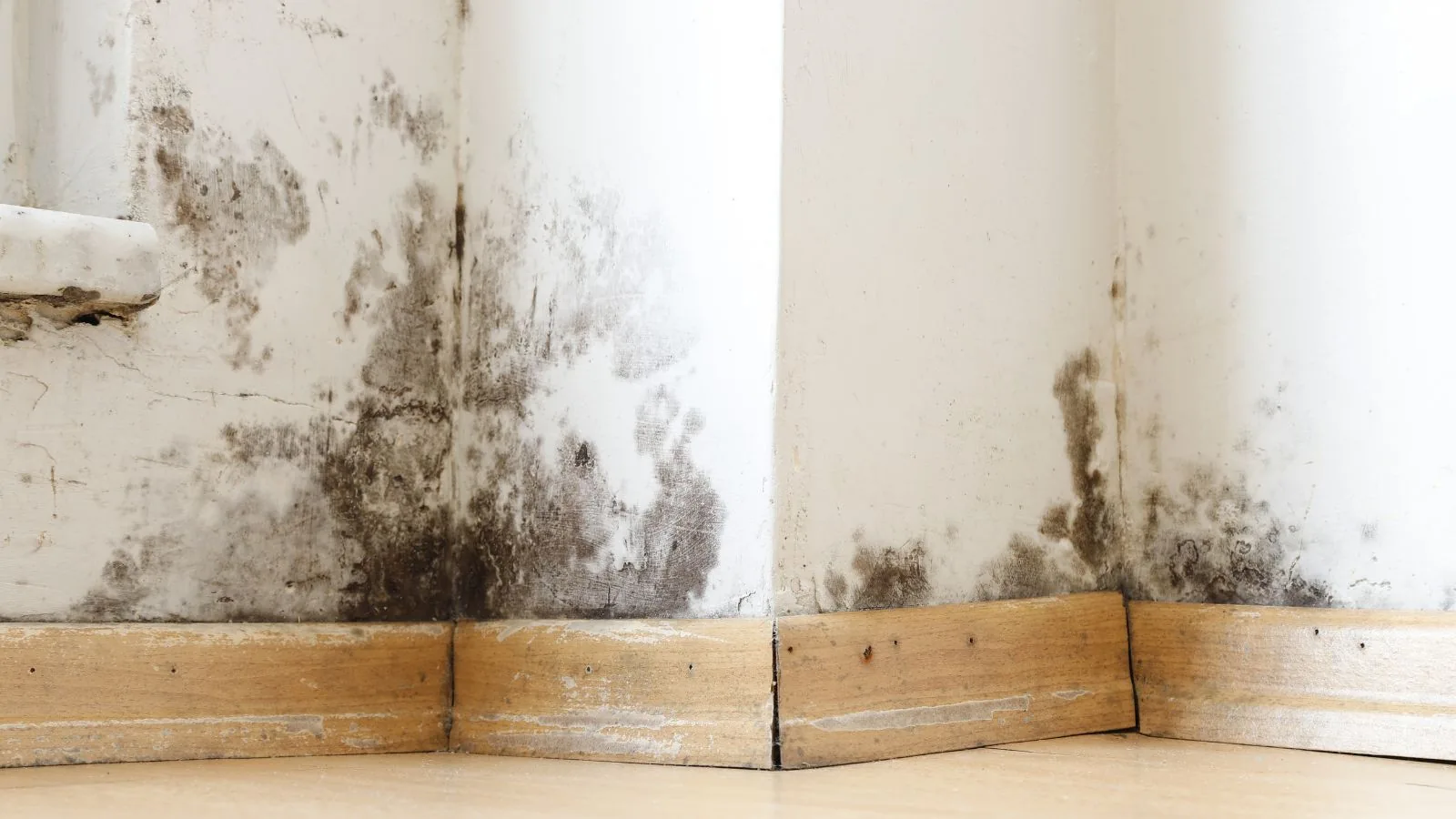
Musty smell, dark spots or a wall that stays damp?
A musty smell, dark spots on a wall or ceiling, peeling paint and a bathroom or basement that never seems to dry are common reasons people call about mold. These are signs of moisture, and moisture is the part to find first. The trade solution is mold remediation, which means containing, removing and cleaning mold after the water source is fixed.
Mold remediation in Mineola, NY is the work of finding the moisture source, containing affected areas, removing mold-damaged materials and cleaning and drying the space. The ANSI/IICRC S520 standard describes how professionals do this. Ask any company whether its crews work to S520.
What New York requires
The New York State Department of Labor licenses mold assessors and mold remediators under Article 32 of the Labor Law. A license is required for mold projects over ten square feet. The license must be displayed at the work site. A licensed contractor cannot perform both the assessment and the remediation on the same property.
Ask to see the license before you hire anyone, and verify it with the Department of Labor. Smaller areas of mold are not covered by the licensing rule, but the same cautions about moisture and containment apply.
The moisture comes first
Mold needs a source of water. Common ones are a leaking pipe, a roof leak, a clogged air conditioner drain, a bathroom without ventilation and a basement with condensation. If the source continues, mold returns. Our callers often mention a leak under a bathroom sink, a closet wall near an air conditioning line or a ceiling below an upstairs toilet.
Dry the structure first. The structural drying page explains how readings are used, and basement water damage cleanup covers lower levels where mold often appears.
Find the water.
Moisture meters and thermal imaging locate the source and the wet area.
Assess.
A licensed assessor examines the area and writes a plan.
Contain and remove.
Containment barriers and HEPA air filtration control spread while materials are removed.
Clear.
A separate licensed assessor checks the area before rebuild.
Where mold shows up in homes
The most common calls involve bathrooms, closets, basements and walls behind furniture. A bathroom ceiling corner above a shower is a repeat location, because steam and poor ventilation keep it damp. A closet on an exterior wall stays cool and dark, and any leak or condensation there gives mold a place to start. A basement staircase with a musty odor often points to moisture in the framing.
A leak under a bathroom sink or an upstairs toilet that wets the ceiling below is another repeat pattern. Water travels, and mold may be far from the leak.
Questions to ask a mold company
- Can I see your New York State mold license, and how is it displayed on site?
- Who will write the assessment and who will do the clearance testing?
- How will the work area be contained, and what air filtration will be used?
- How will the moisture source be addressed so the mold does not return?
- What is in the written scope, and how is the price explained before work starts?
A clear answer to each question is a good sign. Vague answers, pressure to sign immediately or a company that offers to assess and remediate the same project are warning signs under New York law.
Buying or selling a home with mold
Mold found during an inspection can slow a sale. Lenders and buyers may ask for documentation, such as an assessment, proof of remediation and independent clearance testing. We cannot promise what a lender will accept, so ask your agent and lender what they need. Fixing the moisture source and keeping the paperwork from licensed professionals will help.
Mold or a musty smell in your home? Call the 24/7 line and a dispatcher will explain the next step.
Call (516) 845-9582Inspection, testing and clearance
Inspection means looking for moisture and growth. Testing may include air or surface samples. Clearance testing, done after remediation, checks that the area meets the plan's goals. Because New York bars the same licensee from doing both assessment and remediation on a property, the clearance test is done by a different company, which gives you an independent check.
If you are buying or selling a home and a lender or buyer is asking for mold clearance, ask your agent and lender what they accept. We cannot promise any lender's decision.
| Option. | What it involves. | When it fits. |
|---|---|---|
| Dry and monitor. | Fix the leak and dry the area. | Small damp area with no visible growth. |
| Assessment. | Licensed assessor inspects and writes a plan. | Visible growth, odors or a project over ten square feet. |
| Remediation. | Contain, remove and clean. | After the plan is written. |
| Clearance testing. | Independent check after remediation. | Before rebuild or for a sale or loan. |
What mold remediation cannot do
No contractor can promise mold will never return. It can return if moisture does. Questions about health belong with a physician, and we do not diagnose or give medical advice. We focus on water, containment and removal.
Insurance coverage for mold varies, and many policies limit it or exclude it. Ask your insurer exactly what applies.
What shapes mold remediation costs
The scope depends on how much is affected and what it grew on.
- The area affected and the materials involved.
- Containment and air filtration needed.
- Whether the source is fixed.
- Assessment and clearance testing.
- Rebuild after removal.
Check your policy for mold limits. Want your real number? Call (516) 845-9582 and a dispatcher will explain the scope and the price before work starts.
Questions about mold remediation in Mineola
Is mold testing required before remediation?
In New York, projects over ten square feet need a licensed assessor and a remediation plan. A separate licensed company usually does the clearance testing.
Can I clean mold myself?
Small areas of surface mold on hard surfaces can be cleaned if the moisture is fixed. Larger areas need licensed professionals in New York.
Will mold come back?
It can if the moisture returns. Fixing the source and drying the area are the best prevention. Nobody can promise it will not return.
My buyer's lender wants mold removed. What now?
Ask the lender what documents it accepts. Independent clearance testing is a common request, but we cannot promise any lender's decision.
What is the difference between mold and mildew?
Mildew is usually flat and surface-level, while mold can be fuzzy and grow into materials. Both need moisture. An assessor can tell them apart.