
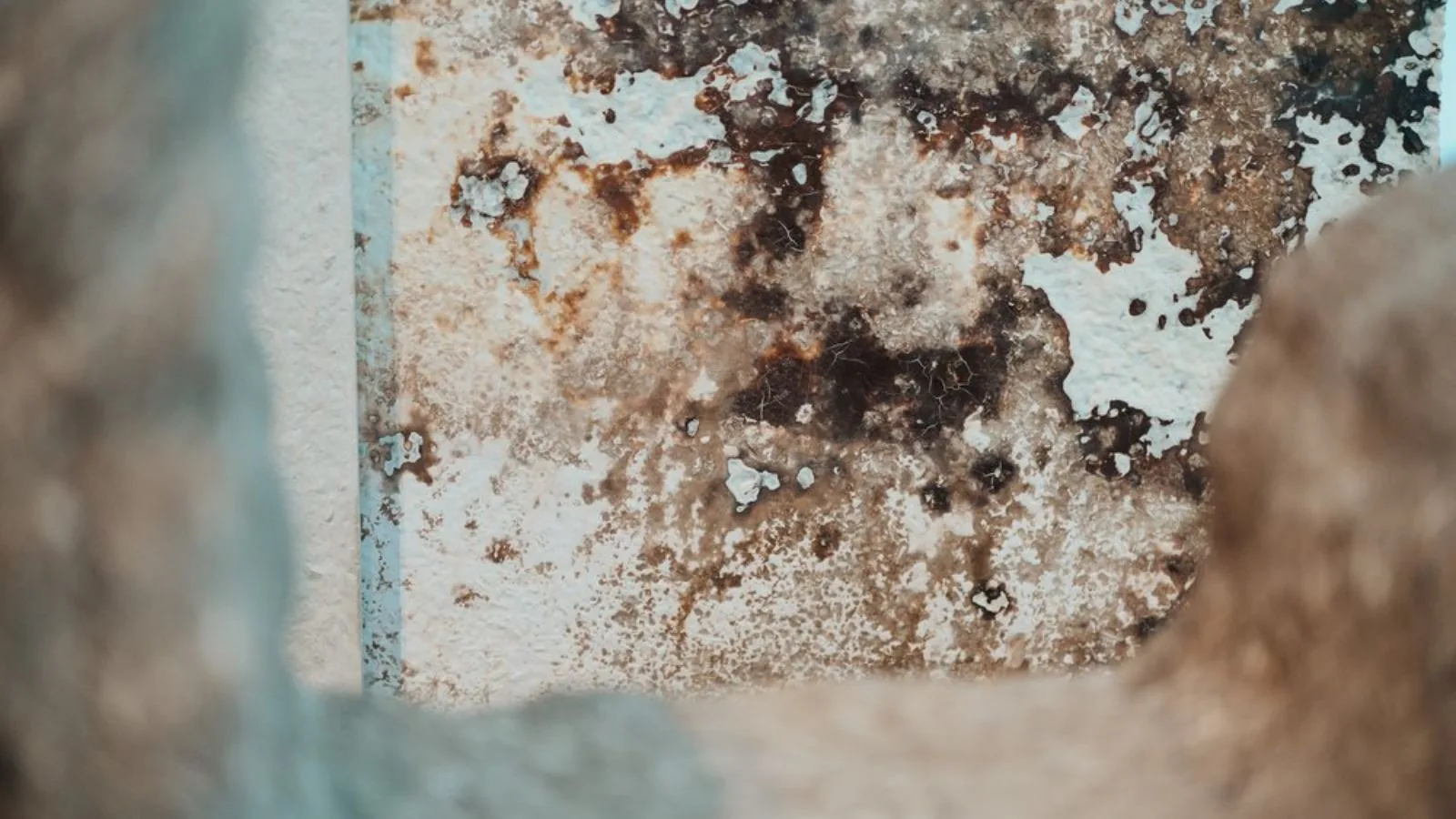
Mildew is a type of mold. In everyday use, the word usually describes flat, powdery or downy growth on the surface of damp materials such as shower tile, window sills and fabric. The word mold usually describes growth that is thicker, fuzzy or slimy and that may go into the material. The line is blurry, and only a lab can name a species, but the practical difference is useful.
How each one usually looks
| Feature. | Mildew. | Mold. |
|---|---|---|
| Texture. | Flat, powdery or downy. | Fuzzy, slimy or raised. |
| Color. | White, gray, yellow or light brown. | Green, black, blue, brown or other colors. |
| Where. | Surfaces such as grout, sills, shower curtains. | Surfaces and inside porous materials like drywall. |
| Smell. | Faint musty odor. | Stronger earthy or musty odor. |
These are tendencies, not rules. A dark spot might be either. Color tells you very little, so base your decision on the size of the area and the material it is on.
Where each tends to show up
Mildew favors bathrooms, kitchens, windows and anywhere surfaces stay damp. It sits on top of tile, caulk and painted walls. Mold shows up where moisture has been serious or long-lasting: wet drywall, ceiling tile, carpet pad, behind appliances or in a basement after a leak.
If you see growth after a known water event, treat it as mold. If you see light spots in a shower with no leak, it is probably mildew, and the fix is ventilation and cleaning.
Cleaning a small spot safely
- Ventilate the room and wear gloves and eye protection.
- Use a detergent and water solution or a product made for the surface. Never mix bleach and ammonia.
- Scrub gently and rinse. Dry the area completely.
- Throw away the cloth and any porous item that stays stained.
- Fix the moisture source, or it will come back.
The EPA says growth smaller than about ten square feet can usually be handled by the homeowner. We make no health claims, and if you have concerns about your health, talk to a doctor.
A weekend check for mildew-prone spots
Pick a dry day and walk the house with a flashlight. In each bathroom, look at grout lines, the caulk around the tub and the ceiling above the shower. In the kitchen, look under the sink and behind the dishwasher. In the basement, look at the bottom of walls, around the water heater and in corners where air does not move.
Press gently on any suspicious drywall. If it feels soft, cold or damp, the moisture has gone past the surface. That is a different problem from a film of mildew on a tile, and it deserves a moisture reading.
Write down what you find with the date. If the same spot looks worse a month later, the moisture source is still active and cleaning alone will not hold.
The IICRC S520 standard for mold remediation is the reference professionals use once growth goes beyond a small surface cleaning.
Seeing growth that keeps coming back? Call and ask about the next step.
Call (516) 845-9582When it is more than a cleaning job
- The area is larger than about ten square feet.
- It is on drywall, insulation, carpet or ceiling tile.
- It followed a flood, a leak or a sewage backup.
- It returns after you clean it.
- There is a strong smell with no visible source.
Those signs point to hidden moisture. The mold remediation page explains the steps, and the structural drying page explains how the moisture is removed first.
Preventing both
Run exhaust fans during and after showers. Fix leaks quickly. Keep indoor humidity comfortable, with a dehumidifier in damp basements. Wipe condensation from windows. Leave space between furniture and exterior walls so air can move.
Homes in Carle Place and Williston Park are often smaller houses where bathrooms and kitchens share walls, so one damp spot can spread.
Kitchen and bath trouble spots to check
Look under sinks for slow drips, behind toilets for seepage, around tubs for failed caulk and behind the washing machine for hose wear. A flashlight and ten minutes reveals more than a year of wondering. If you find a drip, see appliance leak water damage for what to do.
A local note on New York mold rules
New York Labor Law Article 32 sets licensing rules for mold projects greater than ten square feet. The Department of Labor says a residential owner who works on their own property is exempt, which is why small cleaning jobs at home are a homeowner's choice.
Mineola is the Nassau County seat and became a village in 1906. Many older homes have bathrooms with only a small window, so a working exhaust fan matters.
Questions about this topic in Mineola
Is mildew the same as mold?
Mildew is a kind of mold. The word usually describes flat surface growth in damp areas.
Can I tell which one I have by color?
No. Color is a poor guide. Size, material and cause matter more.
Is bleach the best cleaner?
Not always. It does not work well on porous materials, and it must never be mixed with ammonia. Fix the moisture first.
When do I need a licensed company?
New York requires licensed assessors and remediators for mold projects over ten square feet, with some owner exemptions.
Do Mineola bathrooms need exhaust fans?
A working fan or a window that opens reduces humidity. Ask the Village Building Department about permits if you add or change ductwork or wiring.