
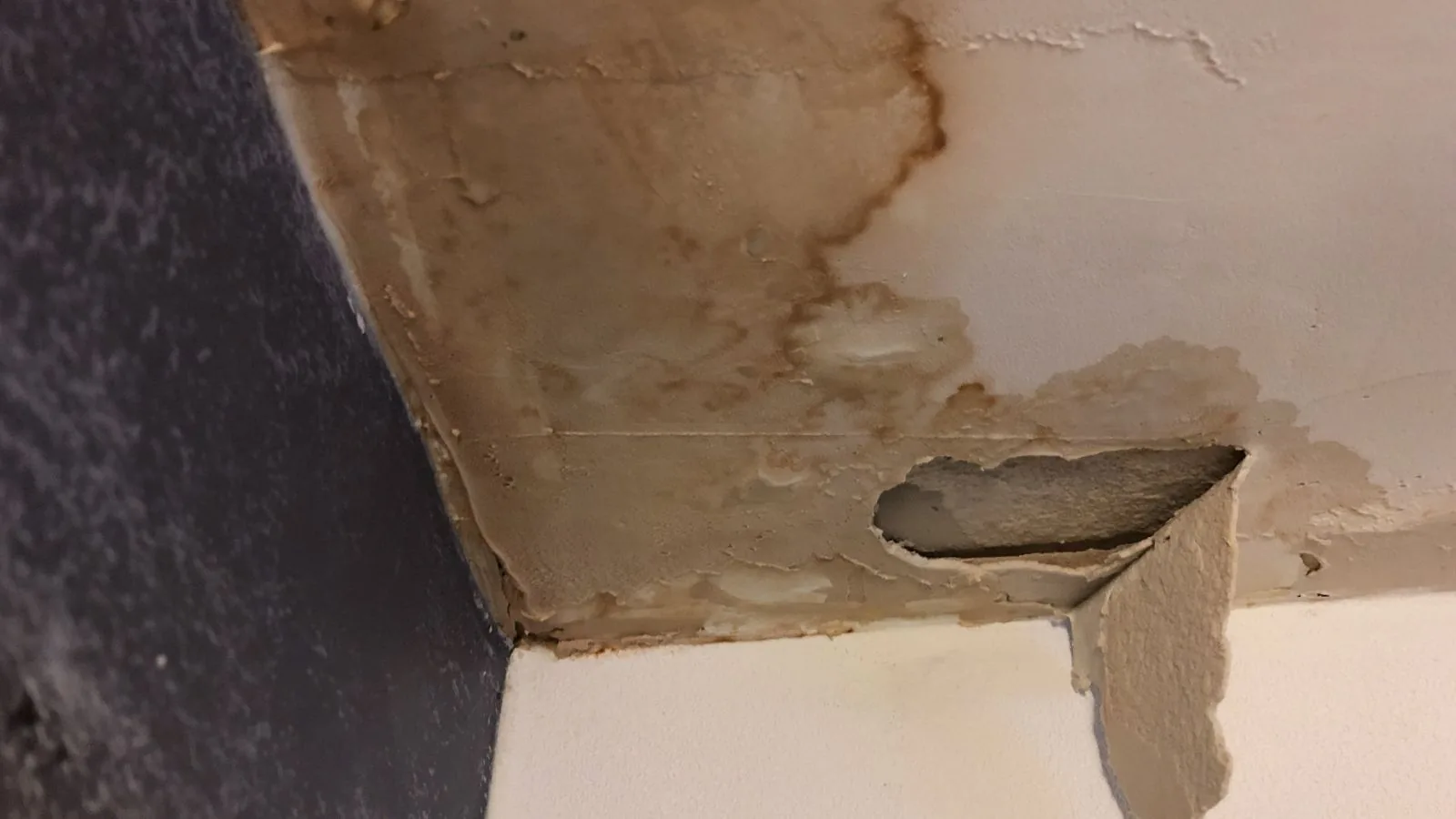
Water stains look the same to most people, but they are not. Some come from an old leak that was fixed. Others come from a leak that is still active. Knowing which one you have decides what happens next. This guide covers the signs, how professionals check and why it matters.
Signs of new or active water damage
- The area is damp, cool or soft to the touch.
- The stain has a dark wet edge and a lighter dried center.
- Paint is bubbling or fresh drips are visible.
- There is a fresh musty smell.
- A moisture meter shows elevated readings.
Active leaks often get worse after rain, after a shower or when the dishwasher runs. If the stain grows after a specific event, the source is probably still active.
Signs of old water damage
- The stain is dry, with a hard brown ring and no dampness.
- The material may be brittle, cracked or discolored in layers.
- There may be paint over the stain, which can hide it for a while.
- Moisture readings are normal.
- Rust on fasteners or hardware near the area.
Layered rings can show that water arrived more than once. Each ring marks a time the area got wet and dried. That pattern often means a slow leak or a repeated problem, not one event.
Do not trust your eyes alone
Dry stains can reactivate. A stain that looks old may sit on a pipe that still weeps under certain conditions. And paint can cover a stain well enough to hide it. A moisture meter or thermal camera tells you whether moisture is present now. A quick reading takes minutes.
How professionals check
A pin meter or a pinless meter reads moisture in drywall and wood. A thermal camera shows cooler areas where water sits. Neither is magic, and a good technician uses both along with questions. When did you notice the stain? Does it change after rain? Is there a bathroom or a roof above it?
If the area is dry now, the technician may mark the stain's edge with a pencil and ask you to watch it. A stain that grows past the line after a storm points to the roof or a wall. One that grows after laundry day points to plumbing.
This kind of simple monitoring costs almost nothing and avoids tearing into a wall for no reason.
A note on ceilings and roofs
Ceiling stains deserve special attention because water travels. A stain under a bathroom may come from the tub drain, while a stain under a roof may come from flashing that fails only in wind-driven rain. Track when it grows, and share that pattern with whoever inspects it.
Moisture mapping, as described in the IICRC S500 standard, is how professionals tell a wet area from a dry stain.
Want a moisture reading on that stain? Call and ask.
Call (516) 845-9582Why the difference matters
For repairs, an active leak must be fixed before anything else. Painting over an active stain wastes money. For insurance, the age and cause of damage affect whether it is considered sudden or long-term. Policies often cover sudden events and exclude gradual ones, so the distinction is real.
For home sales, buyers and inspectors look for staining. Having a record that an old stain was checked and found dry can help. Records of repairs help even more.
What to do with a new leak
- Shut off the water if you can find the source.
- Photograph the area and the source.
- Call a restoration company for extraction and drying.
- Call your insurer if you plan to file.
- Plan the repair after the structure is dry.
What to do with an old stain
Confirm it is dry with a moisture meter. If it is, you can stain-block and repaint. Check the area again after a heavy rain or after a month. If the stain returns, the leak is still active. For ceiling stains, see ceiling water damage repair. For wall stains, see wall and drywall repair.
Hidden moisture can lead to mold. The mold remediation page explains what to do if you find growth.
Residents of Albertson and Carle Place in older houses often find old stains while renovating. A reading before you close up a wall is cheap insurance.
A local note on older Mineola homes
Mineola was incorporated as a village in 1906, and its housing includes homes from the early twentieth century through the postwar years. Older homes can have original roofing details, older flashing and older plumbing, which are common sources of repeat stains.
The Village of Mineola Building Department says permits are required for plumbing, electrical and construction work, so ask it about permits if you plan to open walls or ceilings to chase a stain.
Questions about this topic in Mineola
Can you tell the age of a water stain by looking?
Not reliably. Rings and texture suggest age, but only a moisture reading shows whether it is wet now.
Is a brown ring always mold?
No. Brown rings are often mineral or tannin residue from water. Mold looks different, and testing is needed to say.
Should I paint over an old stain?
Only after confirming it is dry and the source is fixed. Use a stain-blocking primer.
Does an old stain affect a home sale?
It can raise questions. Documentation that it was inspected and repaired helps.
Who do I call about opening a ceiling in Mineola?
The Village Building Department for permits, if the repair involves plumbing, electrical or construction work.