
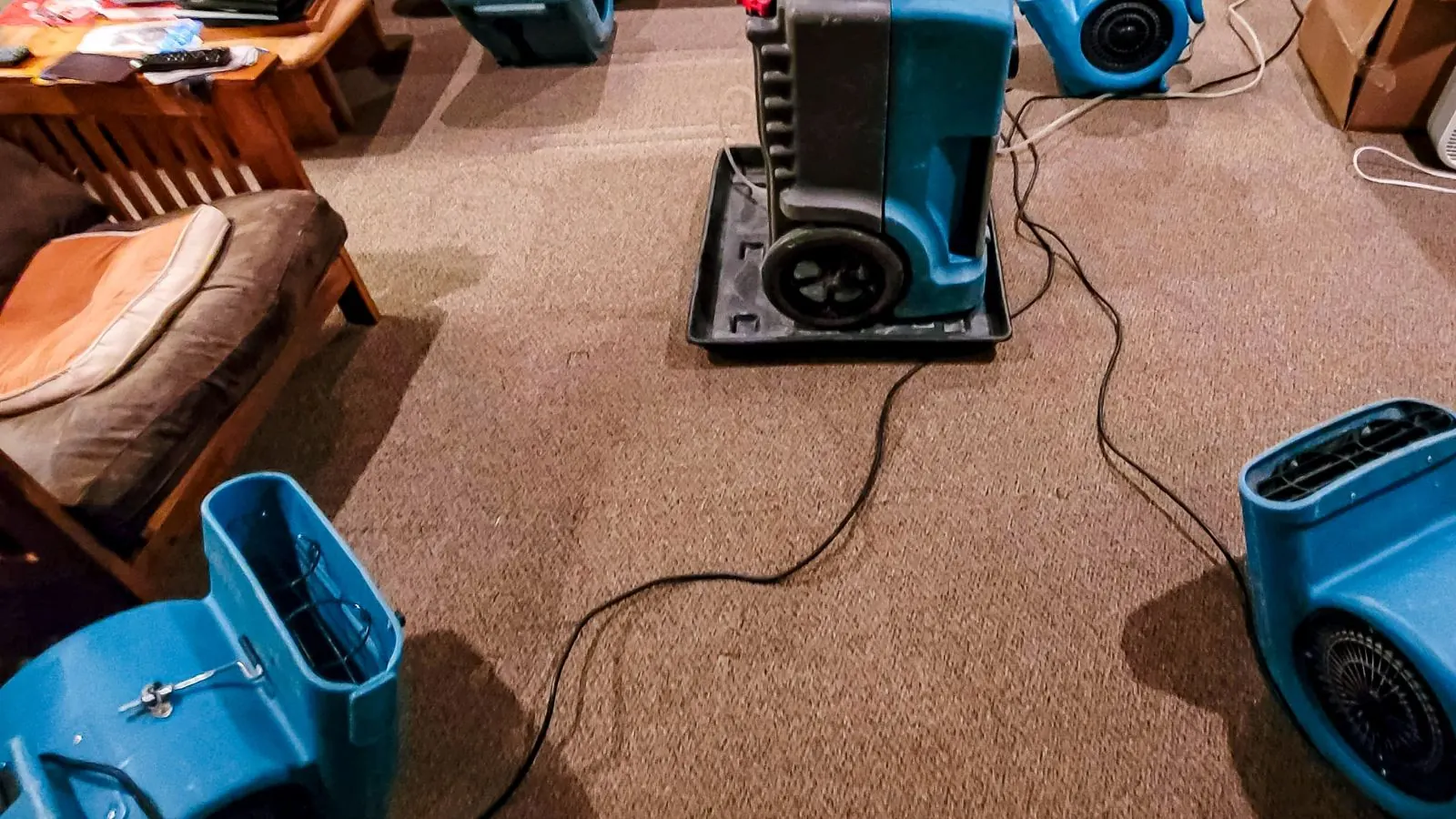
Water mitigation is the work done to limit damage after a water loss. It is different from repair. Mitigation removes the water, dries the structure and protects what can be saved. Repair rebuilds what could not be saved. Knowing the difference helps you read an estimate and ask good questions.
The industry reference for this work is the IICRC S500 standard for professional water damage restoration. We name it because it gives the steps a common vocabulary, not because it is a promise about any one job.
Step 1: Stop the source and make the area safe
Nothing dries while water is still coming in. The first job is to shut off the supply or the leaking appliance. Then the crew checks for electrical hazards, slippery floors and any sign that the water came from a drain, because contaminated water needs protective steps.
Step 2: Inspect and measure
Wet materials do not always look wet. Moisture meters and thermal cameras help show where water traveled, including inside walls and under floors. The crew records readings so there is a baseline to dry toward. Photographs are taken at the same time.
Step 3: Extract standing water
Pumps and wet vacuums remove standing water first. Extraction is the fastest way to reduce what the drying equipment has to handle. The water extraction page explains the tools and the order of work.
Step 4: Remove what cannot be saved
Some materials are better removed than dried. Wet carpet pad, soaked insulation and drywall that stayed wet for a long time are common examples. Removing them lets air reach the framing. If the water was contaminated, porous materials usually have to go.
Extract.
Pumps and vacuums remove standing water.
Remove.
Materials that cannot dry are taken out.
Dry.
Air movers and dehumidifiers pull moisture out.
Verify.
Readings confirm the structure is dry.
Step 5: Dry the structure
Air movers push air across wet surfaces and dehumidifiers pull the moisture out of the air. Opening wall cavities or lifting floor edges may be needed so air reaches hidden water. The details are on the structural drying page.
Drying equipment is noisy, and it runs for days. That is normal. Closing doors to the drying area and keeping the equipment plugged in helps it work.
Step 6: Monitor until readings reach the dry standard
A crew returns to check moisture readings, usually daily. Equipment is moved or removed as areas reach their dry targets. This step is what separates a measured dry-out from a guess. If a wall still reads wet, the equipment stays.
What you can do while the crew works
Your role during mitigation is small but useful. Keep children and pets out of the drying area. Do not turn off the equipment, even if it is loud, because moisture readings assume it is running. Move valuables to a dry room and tell the crew about anything that matters to you, such as a rug or a photo album, before cleanup starts.
If you spot a new wet spot or a smell that was not there yesterday, say so. Water can reappear from a wall cavity after the first pass. Crews would rather add a reading than miss a pocket.
Ask the crew to show you the readings at the start and the end. A dry number on a meter is the difference between a finished job and a hopeful one.
Not sure what step you are on? Call and a dispatcher will help you sort it out.
Call (516) 845-9582Step 7: Clean and sanitize
Surfaces that touched water are cleaned, and contaminated areas are treated according to the type of water involved. Odor removal belongs here too. Cleaning does not replace drying. A clean wall that is still wet can grow mold.
Step 8: Repair and rebuild
Once the structure is dry, repair begins. That can mean new drywall, paint, flooring or cabinets. Repairs may need permits, so check with your village or town. See wall and drywall repair and the floor pages for what to expect.
How long does the whole process take?
Extraction often takes hours. Drying often takes several days, and repair can take days or weeks depending on the damage. The size of the loss, the materials and how long the water sat all change the schedule. Anyone who promises an exact number before seeing the property is guessing.
Residents of Carle Place and Albertson are in our regular service area. The steps above are the same everywhere.
A local note on timing
Mineola sits in Nassau County, where winters bring freeze and thaw cycles and summers bring heavy thunderstorms. The National Weather Service office in Upton, New York issues the flash flood warnings for Nassau County. Mitigation goes faster when it starts the same day, so do not wait for a warning to clear before calling.
The Village of Mineola Building Department requires permits for plumbing, electrical and construction work, which can affect the repair phase after drying is complete.
Questions about this topic in Mineola
What is the difference between mitigation and restoration?
Mitigation limits the damage by extracting water and drying. Restoration is the repair and rebuild that follows.
Why does the equipment run for days?
Water hides in framing and subfloors. Drying until readings reach the dry standard takes time, and stopping early invites mold.
Can I dry the house with fans from the hardware store?
Fans help on small surface spills. They rarely dry wall cavities or subfloors, which is why professional equipment and readings are used.
Is anyone home during drying?
Usually yes, but the noise and heat are significant. Ask the crew about bedrooms and kitchens before you decide.
Does mitigation need a permit in Mineola?
Drying itself usually does not. Rebuild work involving plumbing, electrical or construction does, so ask the Village Building Department.